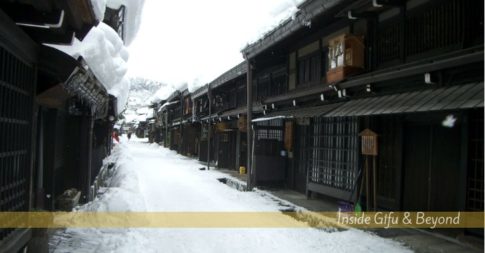
When winter blankets Takayama(高山), the entire town seems to exhale — softly, slowly, as if time itself has paused. The streets of the old town are hushed beneath a cover of snow, and every wooden eave glistens in the pale morning light. Smoke rises gently from the rooftops, carrying the faint scent of firewood, while paper lanterns sway in the cold breeze.
As day turns to night, a quiet glow spills from the machiya(町家)windows, reflecting on the snow like warm gold. The sound of footsteps on the frosty ground echoes through narrow alleys once busy with merchants centuries ago. In this stillness, Takayama reveals something timeless — a harmony between nature, light, and human warmth that feels almost sacred.
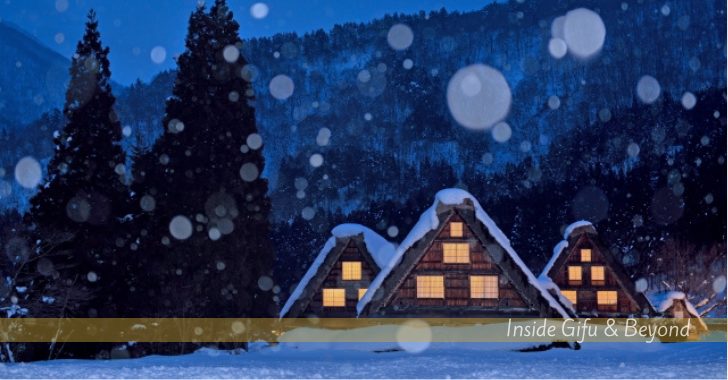
Beyond the mountains, Shirakawa-go(白川郷)rests beneath even deeper snow, its steep thatched roofs (gassho-zukuri, 合掌造り) glowing softly against the winter sky. Together, these two mountain towns embody the quiet heart of Japan’s winter — serene, enduring, and filled with gentle light.
Winter here isn’t harsh; it’s tender in its silence. It invites you to slow down, wrap your hands around a cup of hot tea, and simply be — surrounded by snow, history, and an unspoken beauty that only the quiet can reveal.
The Magic of Takayama’s Snowy Streets
The old town of Takayama is beautiful in every season, but winter gives it a quiet kind of magic.
Along Sanmachi-suji(さんまち筋), narrow streets lined with centuries-old machiya sleep under layers of snow. Their dark wooden façades contrast beautifully against the pure white landscape — a living postcard of Japan’s Edo period preserved in frost and silence.
In the early morning, the town is almost completely still.
Footprints are the only marks on the untouched snow, and the air feels crystalline, sharp yet soothing.
Shopkeepers sweep the paths in front of their stores, steam rises from a cup of hot coffee inside a small café, and the smell of freshly baked gohei mochi(五平餅)drifts softly through the cold air.
Every detail seems heightened — sound, scent, light — as if winter itself wants you to notice how quietly beautiful the world can be.
When evening comes, the town transforms again.
Lanterns flicker to life one by one, reflecting off the snowy streets and the surface of the Miyagawa River(宮川).
The glow from sake breweries (sakegura, 酒蔵) spills onto the street, inviting travelers to step in and warm their hands with a cup of atsukan(熱燗, warm sake).
The laughter of locals drifts faintly through the still air, mixing with the soft crunch of snow beneath your boots.
To walk through Takayama in winter is to experience silence and warmth intertwined — a reminder that even in the coldest months, this little mountain town has an unmistakably human heart.
Winter Light-Up Events — When the Night Comes Alive
As night falls over Takayama, the hush of the snowy streets gives way to something quietly radiant.
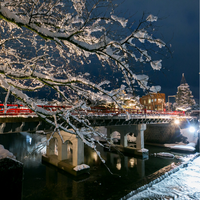
Lanterns begin to glow, one by one, along the Miyagawa River and across the elegant Nakabashi Bridge(中橋).
Their golden reflections shimmer on the snow and water, turning the entire town into a painting of light and shadow.
In winter, Takayama doesn’t sleep early — it simply glows gently, as if whispering warmth into the cold air.
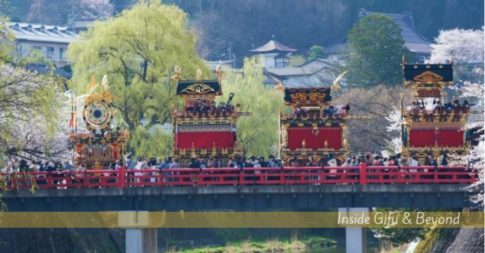
Among the highlights is the Nakabashi Illumination, where the town’s iconic red bridge shines vividly against the snow-covered banks.
Nearby, the Miyagawa Light Path creates a dreamlike scene — hundreds of small lamps lining the riverside, their light flickering softly as snowflakes fall.
It’s not the kind of spectacle that dazzles with intensity; instead, it moves you with quiet grace.
You might find yourself pausing mid-walk, letting the cold bite your cheeks while the world around you glows in gold and white.
Locals often stroll these paths after dinner, wrapped in scarves, chatting softly as they admire the lights.
Cafés and small bars stay open later during the illumination season, offering hot amazake(甘酒, sweet sake) or mulled wine to warm your hands.
It’s easy to lose track of time here — the combination of snow, silence, and light creates an atmosphere that feels almost outside reality.
These illumination events are held annually from December to February, though exact dates and hours vary by year.
If you’re planning to visit, check Takayama’s official tourism site for the latest schedule.
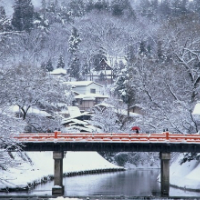
But even outside the event dates, the gentle glow of lanterns along Sanmachi-suji and the reflections on the river give Takayama’s winter nights their own natural illumination — a beauty that needs no spotlight.
A Day Trip to Shirakawa-go’s Winter Wonderland
Just an hour’s journey from Takayama lies a place that feels like it belongs to another time — Shirakawa-go(白川郷), a mountain village wrapped in snow and silence.
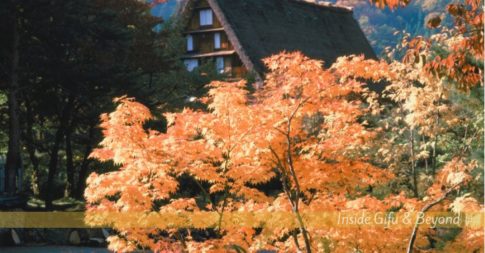
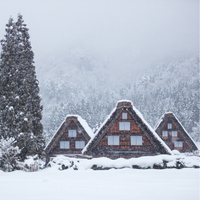
Here, steep thatched-roof farmhouses known as gassho-zukuri(合掌造り)stand like quiet guardians of the past. Their roofs, built to withstand heavy snow, gleam softly under the pale winter sky.
From afar, the entire valley seems to breathe in white — roofs, trees, even the footpaths blur into one continuous blanket of snow.
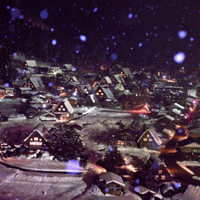
As dusk falls, the magic deepens.
Warm golden light spills from the farmhouse windows, glowing through the snow like lanterns in a dream.
This is the famous Shirakawa-go Light-Up, when the village becomes a living snow globe.
It’s not just a display of lights — it’s a moment when nature, architecture, and human life merge into harmony.
Snow continues to fall softly, muffling every sound except the crunch of boots and the faint murmur of awe from visitors gazing up at the illuminated roofs.
The beauty of Shirakawa-go lies in its balance between stillness and warmth.
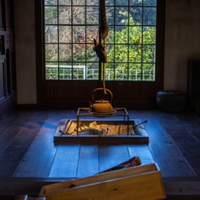
Even when temperatures dip below freezing, there’s a sense of quiet comfort — smoke rising gently from an irori (囲炉裏, traditional hearth), or a local family serving hot miso soup to travelers.
Time moves differently here; it feels suspended, as if the snow itself protects the spirit of old Japan.
While the light-up event draws many visitors each year, the village remains just as enchanting in daylight.
Under a bright blue winter sky, the contrast between snow-white roofs and dark wooden beams is breathtaking.
Walk slowly through the narrow lanes, cross the suspension bridge over the Shogawa River (庄川), and look back — the view of the entire snowy village below will stay with you long after you leave.
Shirakawa-go in winter is not merely a place to see; it’s a feeling to carry with you — of light shining through silence, and of a Japan that endures gently beneath the snow.
Warming Up in Local Style
After wandering through the snowy streets of Takayama or gazing at the glowing rooftops of Shirakawa-go, you’ll soon find yourself craving warmth — not just for your hands, but for your heart. And in Hida (飛騨), warmth is found through flavor, hospitality, and the quiet rhythm of local life.
Step into a small restaurant where steam fogs the windows and the scent of grilled miso fills the air.
Try Hida beef hot pot (飛騨牛鍋), simmering slowly at your table — tender beef, local vegetables, and rich miso broth coming together in perfect balance. It’s the kind of meal that chases away the chill instantly.
Or taste hoba miso (朴葉みそ), a local specialty where miso is spread on a magnolia leaf, grilled over a small flame, and eaten with rice. The smoky-sweet aroma lingers long after the last bite.
For something simple yet deeply comforting, warm your hands with a bowl of miso soup with winter vegetables or freshly made gohei mochi(五平餅)from a street stall.
You might find yourself chatting with the owner — a friendly local who’s been grilling the same snacks for decades. In moments like these, the line between visitor and resident fades; you’re simply sharing warmth on a cold winter day.

And if you have time, venture a little farther into the mountains to find true tranquility.
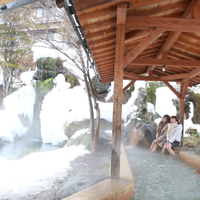
Hirayu Onsen (平湯温泉) and Okuhida Onsen-go (奥飛騨温泉郷) are just a short trip from Takayama, offering open-air baths (rotenburo, 露天風呂) surrounded by snow.
Soaking in natural hot spring water while watching snowflakes drift down from a quiet sky is one of the purest winter experiences Japan can offer. The contrast — steaming water, freezing air, and total silence — is unforgettable.
In Takayama, warmth comes in many forms: a steaming bowl, a kind word, a glowing bath under the snow. It’s a warmth you don’t just feel — you carry it with you, long after you leave the mountains behind.
Travel Tips for Winter Visitors
Getting There
Reaching Takayama in winter is part of the adventure.
Express trains from Nagoya glide through valleys dusted with snow, and highway buses connect from Kanazawa (金沢) and Tokyo (東京) even in the coldest months. Roads are well maintained, but snow chains are required for mountain drives.
Give yourself some flexibility in your schedule. A gentle snowfall may slow down buses or trains, but it also brings the landscape to life with quiet beauty.
What to Wear
Takayama’s winter is cold, often dipping below freezing.
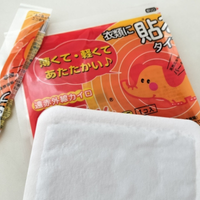
Layering is key: thermal base wear, a warm sweater, and a down jacket will keep you comfortable while exploring the old town. Waterproof boots are a must—the cobblestone streets of Sanmachi(さんまち)can be slippery after snow. A hat, gloves, and heat packs (kairo, カイロ) make even the chilliest walks pleasant.
↑ Heat packs can be purchased at supermarkets, drugstores, convenience stores, etc.
Best Times to Explore
Morning is magical. The air is still, and the rooftops glisten under soft sunlight. Stroll through the Miyagawa Morning Market (宮川朝市) for steaming snacks and local crafts.
Afternoons are perfect for slow sightseeing—step into a sake brewery (酒蔵) to warm up, or visit Hida Folk Village (飛騨の里) to see traditional houses framed in snow.
At night, Takayama takes on a quiet glow. During special winter weeks, light-up (ライトアップ) events illuminate streets and shrines. Arrive early—many visitors come from nearby cities just to see this fleeting beauty.
Warming Up
After a day in the snow, nothing compares to the comfort of an onsen (温泉). Many inns and nearby hot spring towns—like Hirayu Onsen—offer outdoor baths surrounded by snow. For a local touch, try hot sake or Hōtō-style noodle soup (ほうとう) served in cozy izakaya (居酒屋) restaurants.
Before You Go
Check event schedules ahead of time, especially for winter illuminations and shuttle buses to Shirakawa-go. Most accommodations fill early during these periods, so reservations are essential.
Winter in Takayama moves at its own pace—slow, calm, and quietly breathtaking.
If you plan with care and a little flexibility, you’ll find that the cold season here isn’t something to endure, but to savor.
Conclusion — The Beauty of Stillness
Winter in Takayama is not about movement—it’s about pause.
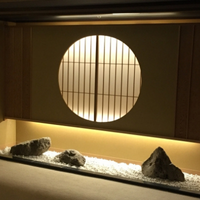
When the snow falls, even time seems to slow. Footsteps fade into soft white streets, lanterns glow behind shoji (障子) windows, and a hush settles over the old town like a blanket. In that quiet, every sound becomes clear—the creak of wooden floors, the distant call of a crow, the gentle rush of the river beneath its frozen edges.
This is when Takayama reveals something rare: a beauty that asks for stillness. You don’t need to chase it; you only need to be present. Sit by the window of your ryokan (旅館) as the snow drifts down, sip a cup of green tea, and watch as the town disappears and reappears in the shifting light.
The same streets that burst with energy during spring festivals now rest under silence, holding their stories beneath the snow. It’s a different kind of celebration—one of calm, reflection, and quiet wonder.
As you leave, you may find that the calm of Takayama lingers within you—a reminder that sometimes, the most memorable journeys are the ones that teach us to be still.